 Go back



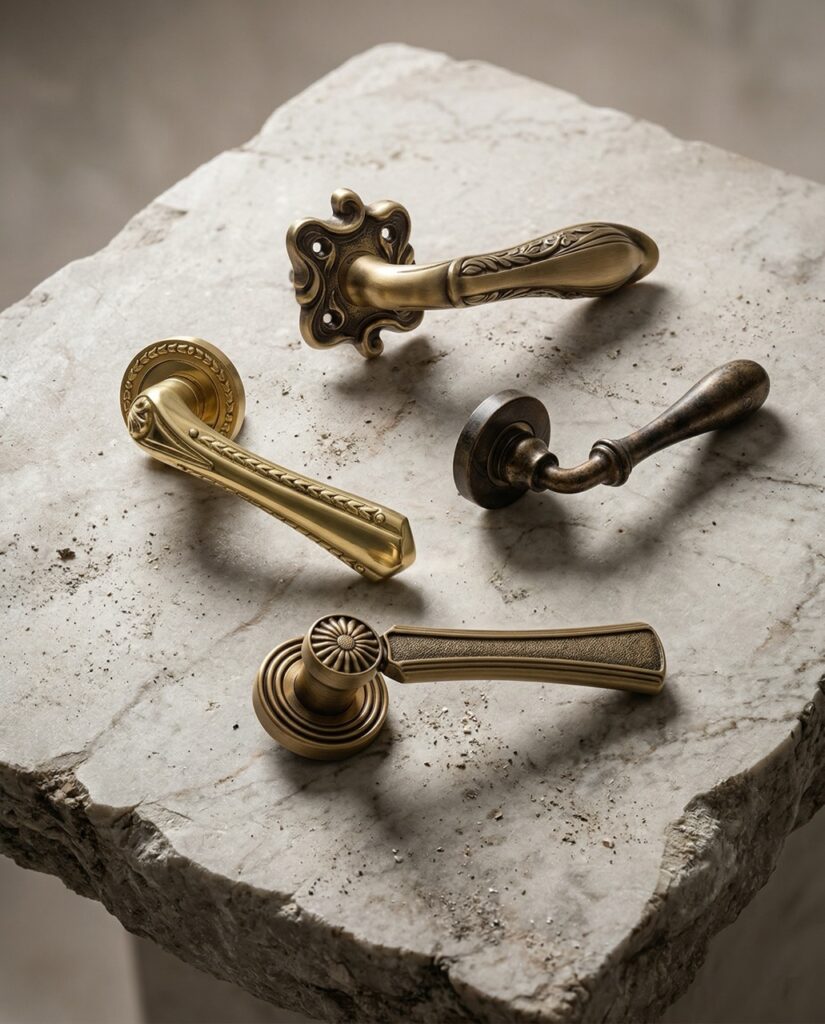
In the world of Vintage, shape alone is not enough. It may evoke the past, of course. It may recall a style, a suggestion, a taste. But if the substance is missing, the effect risks remaining on the surface.
Because the difference is not only in the design, but also in the material.
This is why brass plays such an important role: because it is one of those materials that do not just “look like”, but are able to convey presence, depth, and truth.
It is no coincidence that brass has long been used in architectural and decorative applications: it combines strength, workability, and aesthetics, qualities that over time have made it a reference for certain types of furniture components and accessories designed to last.
It’s not just a matter of appearance.
When observing a Vintage-inspired object, the eye immediately notices the design. But it is the material that determines whether that object will appear credible or not.
The value of brass lies in the way it responds to workmanship, in the nuances it is able to express, in the richness of its surface.
Brass has a value that can be seen, but above all, it can be felt.
When you choose brass, you are not just paying for a “more expensive material”. You are choosing a material that allows you to achieve greater perceptual nobility.
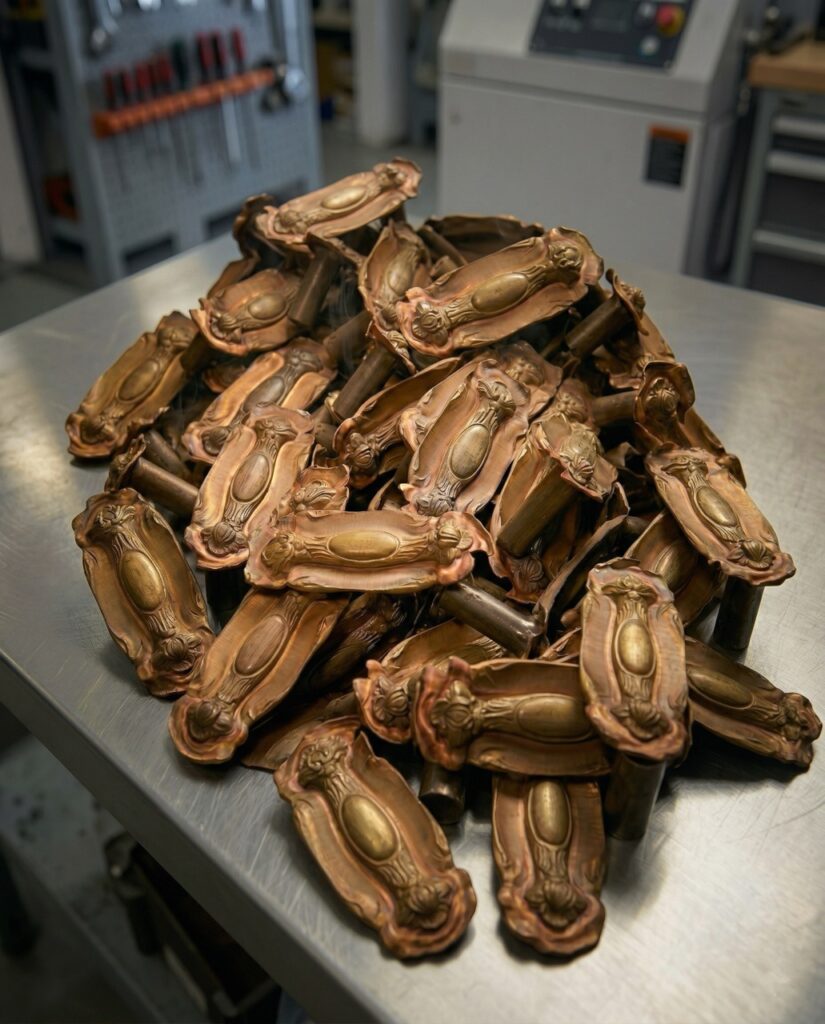
Why is it more expensive than zamak and aluminium.
Zamak and aluminium are not “bad” materials. They have sensible applications and, in many industrial contexts, represent smart choices.
Aluminium is known for being lightweight, durable, and resistant to corrosion.
Zamak, thanks to die casting, is successful in obtaining complex shapes, good surface finishes, and ensures competitive costs.
But not all materials tell the same story.
Brass does not aim for lightness or minimal cost. It aims for:
- perceived quality,
- material depth,
- aesthetic stability,
- value over time.
It is the choice of those who are not just looking for a simple accessory, but a detail capable of elevating the overall level of the environment.
In other words: if zamak and aluminium respond very well to the logic of efficiency, brass responds to the logic of value.
Vintage needs truth, not imitation.
When an object is inspired by the past, every inconsistency is immediately noticeable.
If created using a visually poor material, a historically accurate object, risks losing credibility.
On the contrary, brass manages to provide continuity between style and substance.
Because Vintage also – and above all – thrives on that tactile and visual sensation that makes an object feel “authentic”. And, from this perspective, brass is not just a material: it is part of the language.
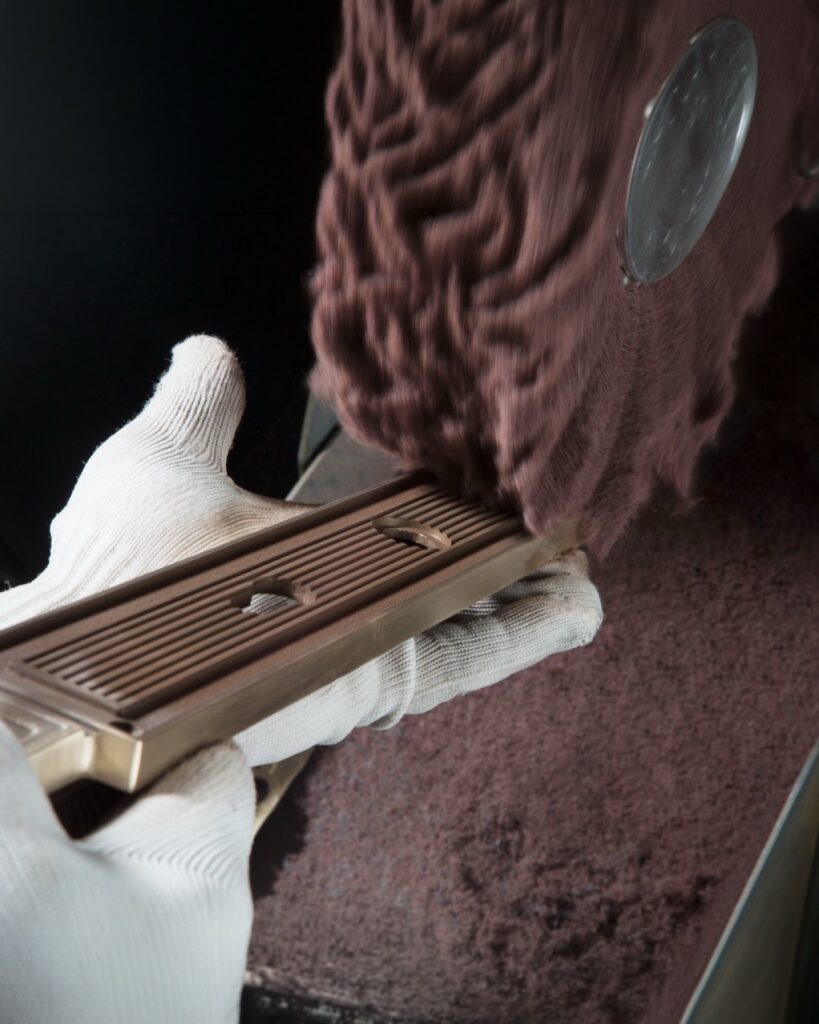
Even imperfection, when calculated, becomes value
There is also an even more subtle, but fundamental aspect: in Vintage, absolute perfection is not always a virtue.
A surface that is too uniform, too identical, risks appearing artificial.
Brass, on the other hand, especially when it meets workmanship and finishes capable of complementing its character, allows that rare balance between precision and authenticity to be obtained.
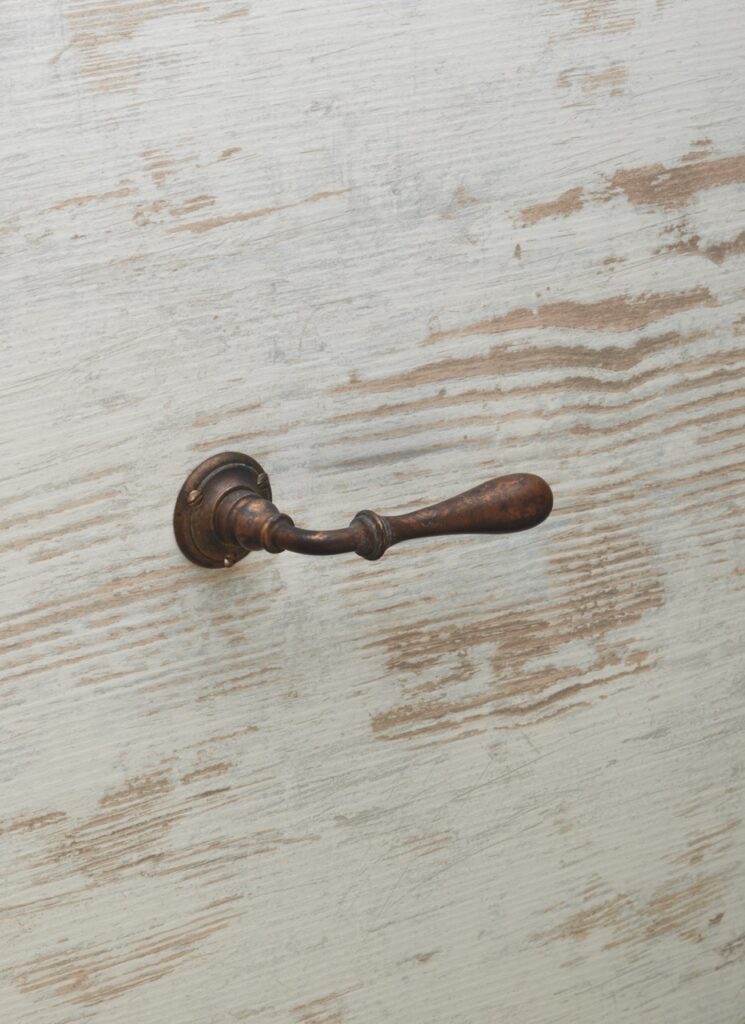
On the one hand, there is the quality of the material; on the other, there is the opportunity to create a more vibrant, less impersonal, and more authentic surface.
And it is precisely this combination that makes the difference between an object that “replicates” the past and an object that truly manages to evoke it. Just like the Vintage collections produced by Linea Calì.
In synthesis
Choosing brass means choosing a material that is worth more—not only because it costs more, but because it offers greater presence, more character, and greater consistency with the very concept of Vintage.

