 Go back





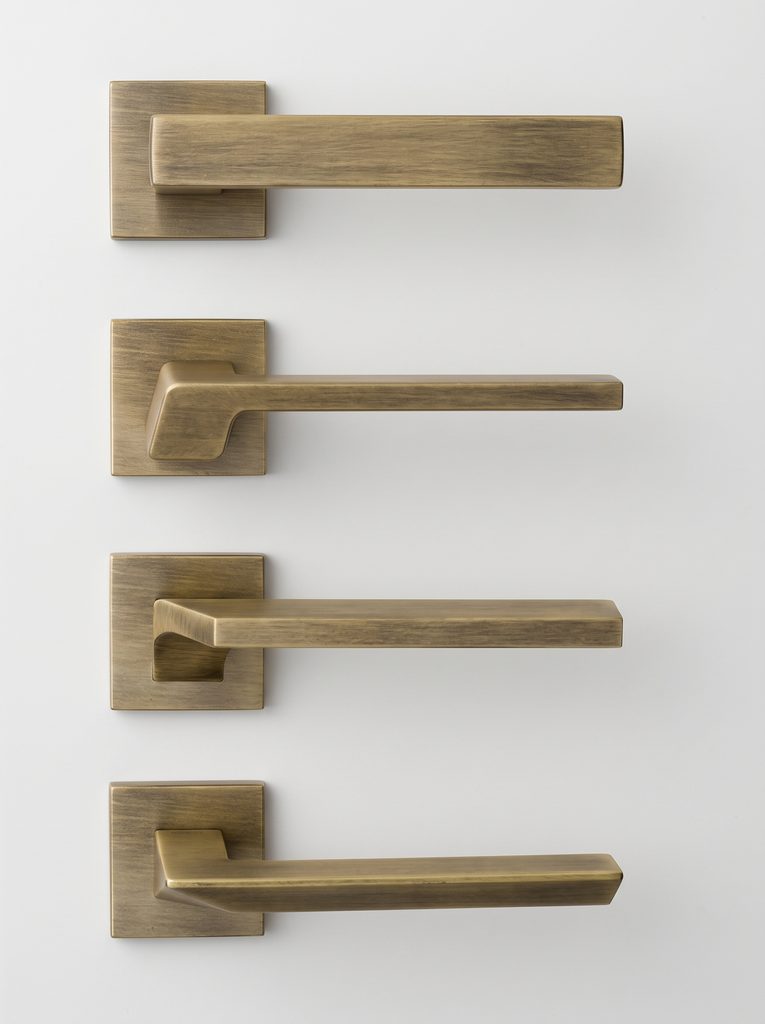
A warm, textured surface, crossed by fine marks that seem to tell the passing of time. It is called Patiné, and it is the new finish available for the Corner, Giro, Stream and Trio handles in the Zincral family: four collections made from zamak, exclusively in Italy.
Its slightly lived-in look is the result of a series of processes carried out by hand.
After die-casting, each handle is ground with a coarse-grit abrasive belt, which evens out the surface and smooths away any roughness left by production.
Next comes emery finishing: a second pass with a much finer abrasive, which refines the surface and prepares it for the stages that follow. This step is usually reserved for top-quality production.
At this point the handle is bronzed. This is the colour base from which Patiné takes shape.
The surface is then worked with special abrasive flap brushes that can follow even complex profiles and geometries, creating a pattern of scratches, lighter areas and tonal variations.
The pressure applied by the operator, the number of passes and the shape of the handle make every piece slightly different from the next.
The details of the steps that follow cannot be revealed, as they are part of the trade secret with which Linea Calì protects the final result.
The last step is a clear matt lacquer that protects the surface and helps preserve its appearance over time, with no risk of it oxidising or gradually changing with use.
Its bronze tones pair naturally with wood doors, as well as with painted surfaces in shades of ivory, deep green or cocoa.
It is a finish that suits classic interiors and renovations, yet on the clean geometries of Corner, Giro, Stream and Trio Zincral it takes on a particularly interesting character in contemporary interiors too.
Who the Patiné finish is for.
Patiné is designed for those who prefer a surface rich in nuance to the uniform perfection of more traditional finishes. The small differences between one handle and another become part of its value: unique traces of the process through which it was made.

